I recently came across something I wrote a while ago about omelets, which are pretty simple things really. Simple until you start mucking about with them, that is. Then they become complicated.Like the rib of beef I cooked a few weeks ago; brown it on both sides, pop it in the oven for a few minutes, rest, carve, eat. Job done.The devil, for omelets and rib of beef, is in the details, the provenance of your eggs and beef, the care the producer has taken over what her animals have eaten and, in the case of the beef, the care taken over the slaughter and ageing of the beef (which, incidentally, is not something generally done very well in France).Buy cheap eggs or cheap beef and, no matter how well your preparation and cooking go, you’ll end up with a meh result. Equally, buy the best products – and prepare them using your incredibly expensive knives and equipment in your multi-thousand dollar kitchen – using rubbish techniques, and you’ll still end up with a meh result; perhaps even more meh than the cooking goddess who starts with average products and applies great care and techniques.So to roast chicken. The bird above started out as a cheap supermarket Poulet Jaune, a yellow chicken so called because, duh, it’s yellow. The yellow comes from the corn it’s fed during its short one-month life.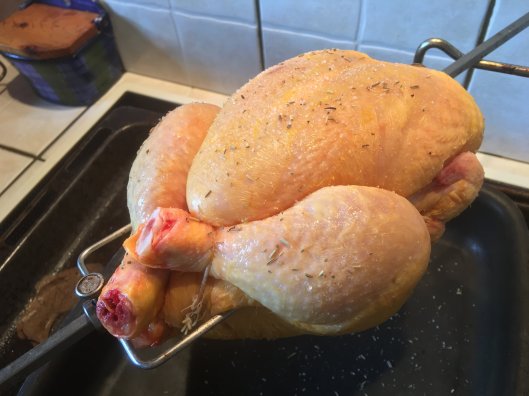 Then comes the application of a little seasoning – fine-grain salt all over and a large pinch of herbes de Provence – and the heat. In this case it’s cooked in a rotisserie oven. Which makes all the difference.Back in my professional life we’d roast a chicken for one hour; the first quarter hour on one thigh, then the second on the other thigh, the third on its chest and the final quarter of an hour on its back to crisp the breast. It’s a finnicky process because you have to set timers or have a good sense of time to keep on schedule, but it’s important to prevent whichever side is uppermost from drying out. You also have to baste your beast (as with any roast meat) using the juices in the pan.A rotisserie oven does all this for you, auto-basting the bird and ensuring that each side gets an even amount of heat, producing a far superior bird than even the most assiduously turned one.I’d like to say I carefully planned for and chose our rotisserie oven, but it was here when we moved in; and the first oven I bought in France had one too, so perhaps it’s just a Thing here. But well worth it for the difference it makes to roast chickens – I don’t use it for anything else, although perhaps I should.
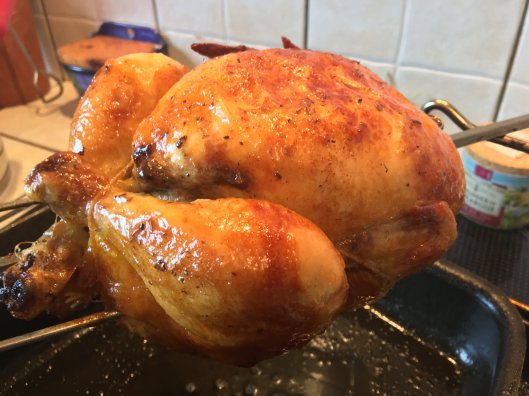 An hour or so later it’s ready, cooked to perfection. There’s a cooking pan underneath the chicken to catch the juices which I use to make a sauce. While the chicken is resting for 10-15 minutes, I put the pan on a high heat and deglaze with some alcohol – this time I used some muscat wine. Scrape up all the stuck on bits and reduce the liquid to almost nothing, then add in some chicken stock. Reduce this down until it’s the thickness you like and serve. It takes 5-10 minutes, and you can leave it alone to make a lovely sauce while you prepare your veg.And really that’s all there is to it, apart from carving the chicken which can be an art in itself. To do this properly you need to learn from a Maitre d’hotel who has learned at the side of another master, they will do it perfectly.Essentially, you remove the wings, then the legs which you divide into upper thighs and drumsticks. Then you remove the two breasts, cutting them each into two portions. In all you can make 8-10 (small) portions from a 1.5 kilo bird.Very simple. N’est-ce pas?

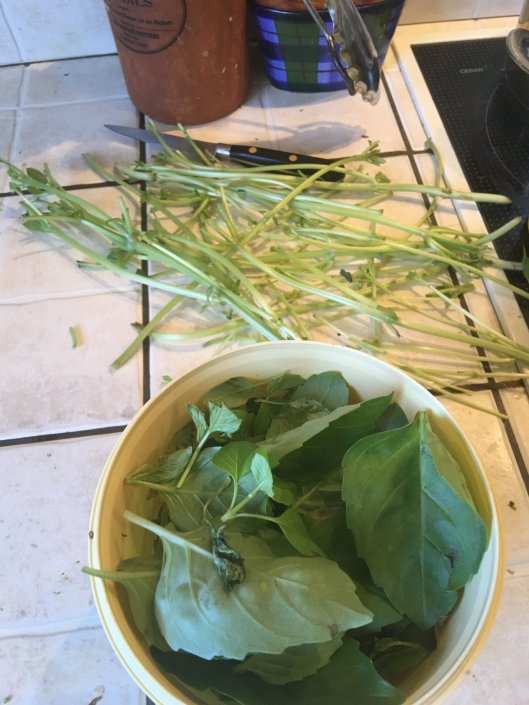
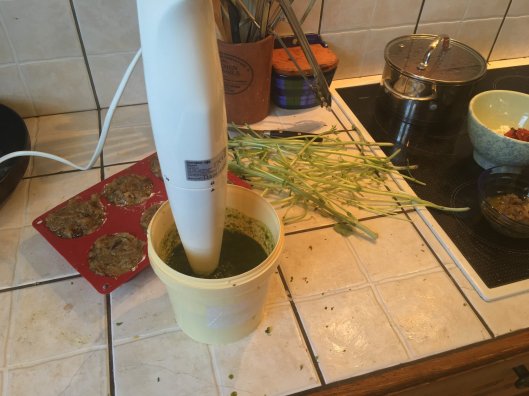 You can use it as it is, or add lemon juice or another acid to really transform it into a vinaigrette. Add parmesan too and it goes well on crunchy salad leaves or beef carpaccio.It’ll keep a bit in the fridge but be careful, you’re smooshing all sorts of bugs into the basil which could harm you.
 And then it’s just a question of churning them out. Keep two pans going, more if you have them, and don’t let your attention wander. Also, don’t have your stove too hot – on my electric hob the rings are at 7 on a scale of 1 – 9, which means the crêpes get about two minutes each side.Stack them up and serve them with, well, whatever you like; Nutella’s a big favourite here as is a sugar/lemon mix; sometimes they go for butter and maple syrup, too.And chantilly cream, obviously.
 This is a half-successful attempt at chantilly cream – it was hot (over 30°C today) and I hadn’t chilled the cream, bowl or whisk as I’d normally do as a matter of course. The problem when it’s hot is that the cream separates quickly into a solid and milky liquid, but it still tastes good albeit a little heavy.Bon appetit!
 One last note: for various reasons (OK, I’m lazy and it was the first packet that came to hand) I used brown, less-refined sugar to make this crème patissière and it turned out very well, a subtly caramelised taste which is very pleasant.
 Anyway, one of the features of the school of my youth was the school Tuck Shop, a small room in the cloisters where we could queue up at 10.45 every morning to buy sticky currant buns. And very delicious they were too.I’ve had these buns in the back of my mind for the past 40 years, and have now succeeded in reproducing them pretty well, using a recipe for French brioche dough.Well, recipe; I exaggerate – I follow the instructions on the packet, mix it up in my bread machine (my old hands are too stiff to pound dough, what with the carpal tunnel problems and my innate laziness), form the dough into buns and pop them into the oven.Simples.
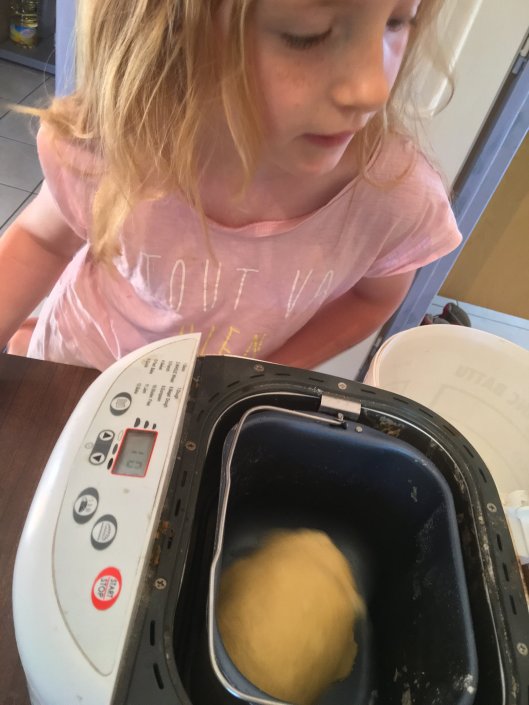 So I buy ‘Farine T45 de force’, strong gluten-rich flour specially made for brioches with added gluten and powdered egg yolk; there’s a regular T45 for doing other patisserie which works, but this works even better. You don’t have to read the small print or delve into details – you just buy the one marked ‘Brioche’ on the front. It’s the powdered egg yolk plus the egg you add later that makes it yellow.The recipe is quite simple: 175ml cold milk, 40g sugar, 8g salt, 75g cold diced butter, a whole medium egg (50g) and 350g of the special flour plus a sachet of dried active yeast (you can get a special brioche yeast here, regular works fine too).I add these ingredients, in this order, to the bread machine and set it going on its 90 minute mixing and raising program (the small curious child above is optional). After about 20 minutes I add the raisins I love (and which the small child above hates) and they get mixed in appropriately. Sometimes I do have a tendency to add a few too many and it looks, as my good friend Caroline’s granny always said, as if they’ve been ‘Thrown in from the top of the stairs’.
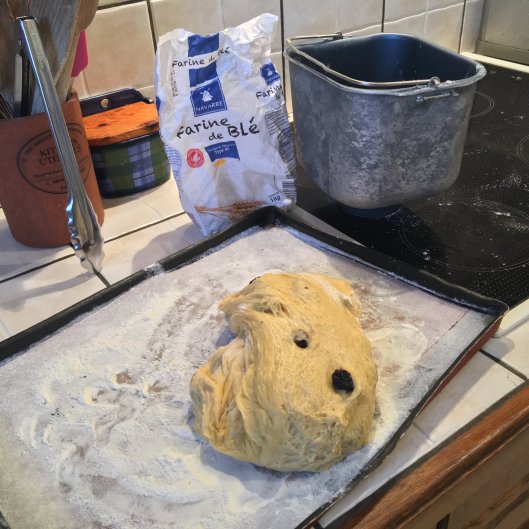 After an hour and a half the dough has risen; I take it out and divide it into eight (roughly) equal balls and leave them to rise again for half an hour while the oven warms up to 180°C.
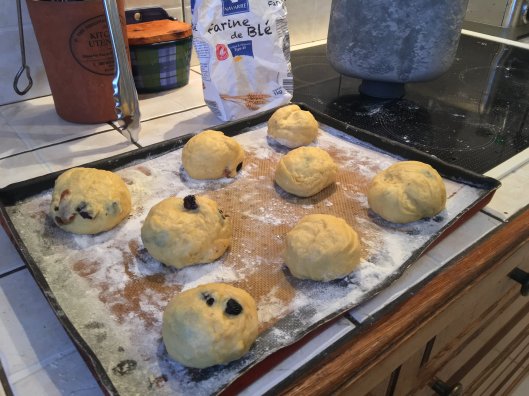 They rise quite nicely, and when they’re ready to go into the oven I give them a quick egg wash (roughly beat one egg in a bowl or mug, paint it on with your pastry brush).
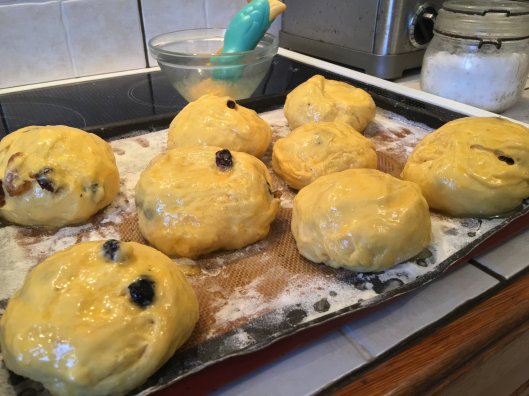 After 12 minutes in the oven I turn the baking tray around 180° and give them another five minutes, to ensure even cooking. Then when they come out and have cooled I give them a sugar syrup coating to make them really shine, nice and glossy.
 Miam. Serve with some nice salted butter and good strawberry jam. And, if you can get it, clotted cream.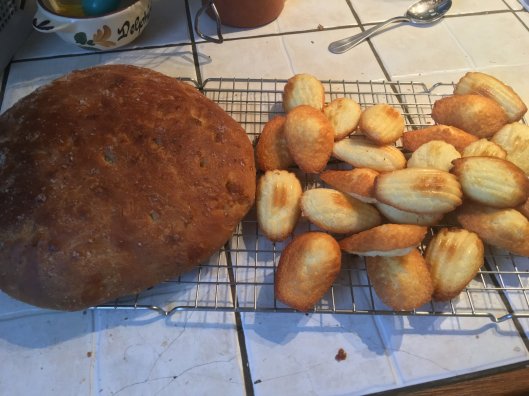

 Remove them from the molds after allowing them to cool for 5 minutes – otherwise they’ll stick to the inside – and cool on a wire rack for as long as you can resist eating them. The advantage of silicone molds is that they’re very easy to pop out, pushing them from the other side to get them onto your wire rack.Miam, as they say in Proustian.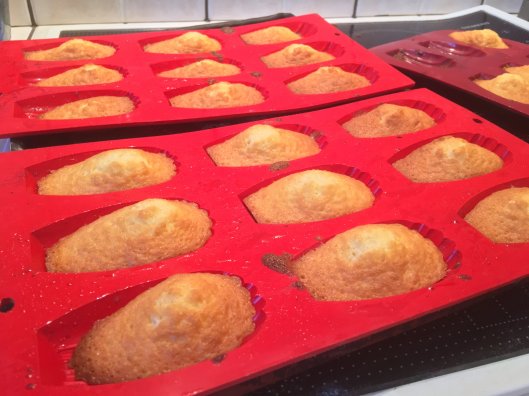
 But Magnus Nilsson takes this to a new, Olympic level; a chef who closes his restaurant for two months of the year so his brigade can design and rehearse the new season’s dishes.His book,
 Smearing chocolate sauce around the inside of the glass gives an interesting effect and allows small children to keep busy scraping it off later with their sundae spoons.
 Total production time is about 10 minutes, less if you get your act together and have everything ready to go at production time.Give it a go. It’s as nice for grown ups as for kids.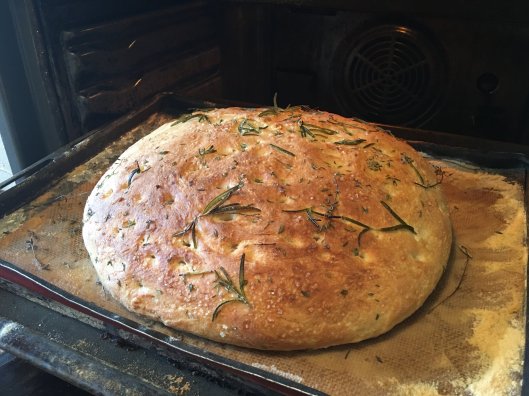
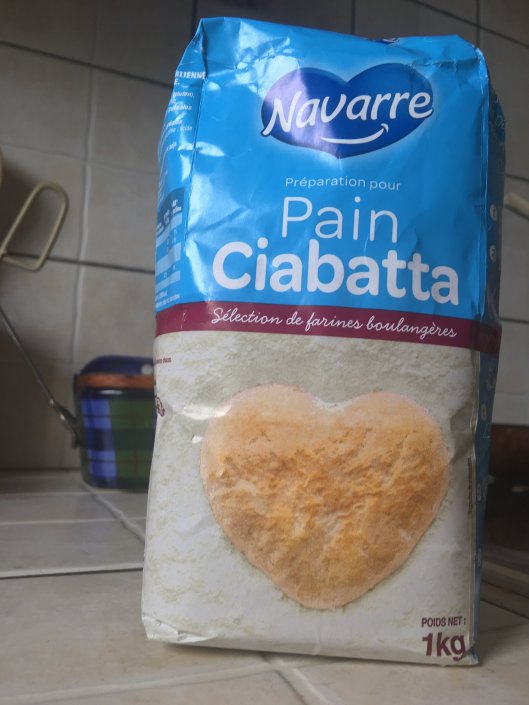
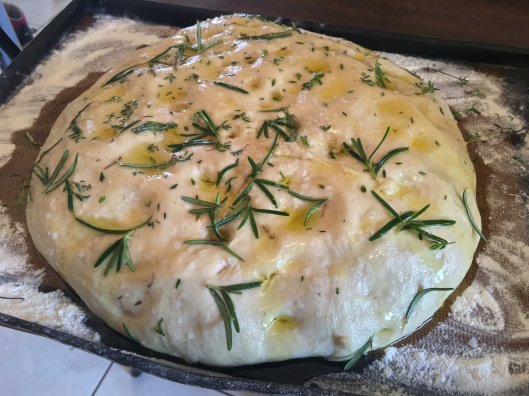 When it’s risen again – usually 20-30 minutes later – I put it into a very hot oven (220-230ºC) and bake it for 20 – 25 minutes, turning it 180º after a quarter of an hour to ensure even browning.And it makes a very light, ciabatta-style loaf. The whole process is very simple, it’s much easier to do than to describe in fact. I use a similar process now to make brioche buns, although in this case I usually use brioche flour and a separate sachet of special brioche yeast; the all-in-one packets of brioche flour and yeast don’t seem to work so well.The bread is very tasty – it’s no sourdough special but it’s very edible, lovely with some nice paté or cheese or just used for mopping up sauce or soups.The flour is a simple packet bought from Lidl, it costs less than a euro; a whole loaf costs under 50 cents.
 Once the bread is baked – test by rapping the underside with your knuckles, it should sound hollow – allow it to cool on a wire rack. If you just leave it on a worksurface, steam will turn to water underneath and give you a soggy bottom. Missus.If the loaf doesn’t get all eaten at once I slice it and freeze it, then can take out a slice or two at a time from the freezer. Makes great toast this way.
 mostxlnt.com